The following content is archived, and is being kept for reference, research, or recordkeeping.
Published June 22, 2022
The Spring City Historic District (Additional Documentation) located in Spring City, Sanpete County, Utah, was listed on the National Register of Historic Places (NRHP) on October 22, 1980 (NRIS #80003957). This amendment provides additional documentation to define the period of significance to a beginning date of 1859 and to extend the period of significance to an ending date of 1972. This amended nomination also updates the NRHP eligibility of each primary resource within the district, delineates historic contextual periods, and refines the boundaries to better support the significance and integrity of the district. The Spring City Historic District (Additional Documentation) is significant at the local level under Criterion A for the district’s association with broad patterns of history in the areas of Exploration/Settlement, Agriculture, and Community Planning & Development. The historic district is also significant under Criterion C in the area of Architecture for embodying the distinctive characteristics of rural Sanpete County architecture throughout the historic period of significance.
Under Criterion A, the original district nomination prepared in 1980 focused on two areas: Exploration/Settlement and Agriculture with a period of significance between 1851 and 1915. The Spring City Historic District as documented in 1980 was an excellent example of the patterns of Mormon town planning during the settlement period and well as the agricultural practices that distinguished rural village living in the mid-to-late nineteenth century. The beginning date of the period of significance has been revised to 1859 for three reasons: 1) it is the year of the first town plat that is still visible on the landscape; 2) the 1859 plat was based on the principles of Mormon town planning as described in both the original and this amended nomination; and 3) the survey plat has informed the architectural development of all subsequent periods. Spring City was the first historic district in Utah to encompass an entire town. The additional documentation provided in this amendment confirms the district’s continuing historic integrity of location, setting, design, and feeling, which has not changed substantially since 1980. Spring City is still a quintessentially rural village. The town’s layout, architecture, agricultural outbuildings, streetscapes, and landscapes, continue to contribute to the overall historic characteristics described in the original nomination. This amendment defines two contextual periods for the timeframe covered in the 1980 nomination: the Settlement Period (1859-1869) and the Incorporation and Growth Period (1870-1911).
The period of significance for this amended nomination extends the ending date to 1972, which recognizes historic resources that have achieved significance since 1915. The 1972 is significant as the year Spring City was included in a book on Utah ghost towns after a two-decade period of population decline and virtually no construction. These conditions preserved the historic character of the community and attracted the attention of architectural historians, including the authors of the 1980 nomination who described Spring City as the “best example of Mormon village development” in the Sanpete Valley.
The Spring City Historic District (Additional Documentation) includes Community Planning & Development as an additional area of significance under Criterion A. Prior to the incorporation of Spring City in 1870, the settlement was only sparsely developed with scattered residences. The majority of public and commercial buildings in town were built during the Incorporation and Growth Period (1870-1911), including 30 of the 33 buildings identified as significant in the original historic nomination. A third contextual period, the Civic Improvement and Specialized Agriculture Period (1912-1956), defines a significant historic period not included in the original nomination. During this period of population stability, the architectural development Spring City decreased and a number of civic improvement projects brought the community into the twentieth century without compromising its nineteenth-century character. The significance of the fourth and final historic contextual period, Isolation and Decline Period (1957-1972), begins with a single event: Utah Highway 89 bypassed Spring City’s Main Street to become Sanpete County’s primary north-south corridor. This period is defined by a precipitous decline in development that mirrored a decrease in Spring City’s population by 50 percent as Spring City was transformed into a “living” ghost town.
The Spring City Historic District (Additional Documentation) is eligible for the National Register of Historic Places under Criterion C in the area of Architecture for its association with the evolution of architectural types and styles from the mid-nineteenth century to the mid-twentieth century within a rural Utah community. The Spring City Historic District is remarkable for its enduring historic integrity from the settlement period to the 1880s, which the original nomination described as the “folk design” period, representing limited access to materials and the knowledge local builders brought with them from their places of origin.
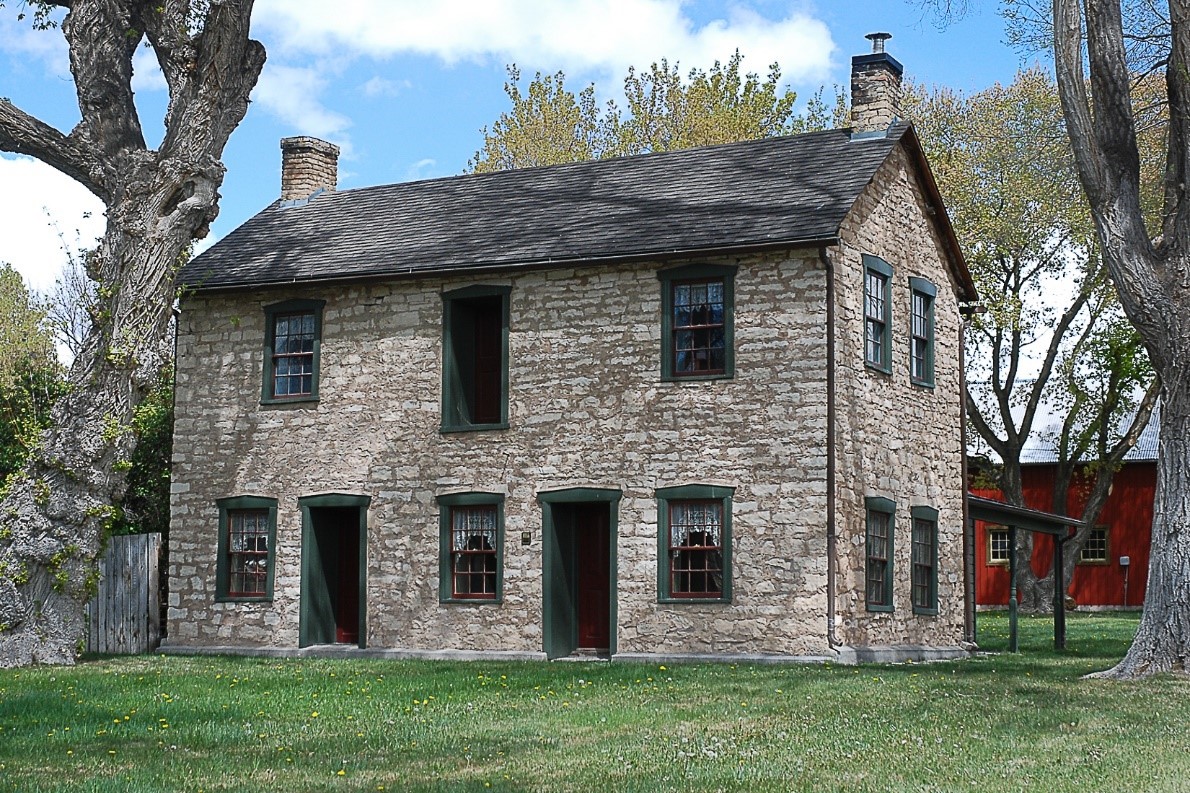
Spring City features excellent examples of the truly vernacular (e.g. log cabins), while there are also many distinctive examples of traditional styles such as the Greek and Gothic Revivals. The district also has significance and historic integrity for the period from the 1880s to the early 1900s, which is described in the original nomination as the “pattern book” period. The two periods overlap as Spring City’s local builders gradually embraced methods of construction and materials associated with national trends: for example, the Italianate, Victorian Gothic, Queen Anne, and the Victorian Eclectic. The district includes the high artistic work of master masons (e.g. Jens Sorensen, John Bohlin, and Jens P. Carlson), as well as two designs from the prominent Utah architect, Richard C. Watkins.
Under Criterion C, the Spring City Historic District (Additional Documentation) is also architecturally significant for the two periods outside of the original nomination’s period of significance. Starting in the 1910s, local builders constructed types and styles popular throughout the United States in the twentieth century (e.g. bungalows, period cottages, ranch houses, etc.). Notably, Spring City’s local builders chose to maintain the one-home-per-block pattern established by the settlement builders. It is important to note that older homes were rarely demolished in this period and there are numerous examples of log, adobe, and stone houses with mid-century modern upgrades and additions, or converted to outbuildings. There are also several excellent examples of larger agricultural buildings that represent the shift from subsistence/local to large-scale agricultural production. The few examples of commercial and public buildings from this period have excellent historic integrity. Though not individually distinctive, the more modest buildings and outbuildings from this period represent the architectural evolution of the district and enhance its historic character.