Updated: Oct. 31, 2025
What was Utah’s World War II experience? The Utah Historical Society’s 2025 Perspectives Speaker Series will explore this question from a variety of viewpoints, linking past experiences to the present through the stories and voices that shaped our state’s history and culture. From front-line soldiers to extensive homefront efforts due to Utah’s strategic location, Utahn’s varied experiences have left a profound legacy that can still be felt across the state today. This series aims to explore how we honor and remember Utahn’s service, sacrifice, and experiences.
These events are free and open to the public, but advanced registration is highly recommended. Please review the “Know Before You Go” section as you RSVP for each event below.

Public Memory and Commemoration: WWII in the Memory of Utahns | RSVP
Friday, Oct. 24 at 7 p.m. *Rescheduled from Oct. 10
Fort Douglas Military Museum (32 Potter St. Fort Douglas, Utah 84113)
From 1941 to 1945, the United States of America was involved in the largest and most destructive war in the history of the world. It impacted every part of daily life, for soldiers and civilians alike. After the war, as society was left to deal with the fallout, efforts to commemorate and memorialize the impact of the war continued in an effort to simultaneously remember and forget the trauma of the war. This lecture will give an overview and explanation of the efforts put forth by Utahns to allow them to come to terms with their contributions and experiences, through museums, memorials, and commemorations.
About the speaker: Patrick Hargis has been the director of the Fort Douglas Military Museum since August 2024. Formerly from Michigan, he moved to Utah in October, 2023 to become a Historian/Archivist for the Utah National Guard. He earned both his BA and MA in Public History at Western Michigan University in 2017. He served in the United States Marine Corps and is currently in the Utah Army National Guard, and his academic focus is on American Military Culture and Memory from the Progressive Era to the Atomic Age.

Utah’s Rosies: Women in WWII | RSVP
Monday, Oct. 13 at 11 a.m.
Utah Valley University, Bingham Gallery (located on the first floor of the Fulton Library)
*This event will be livestreamed
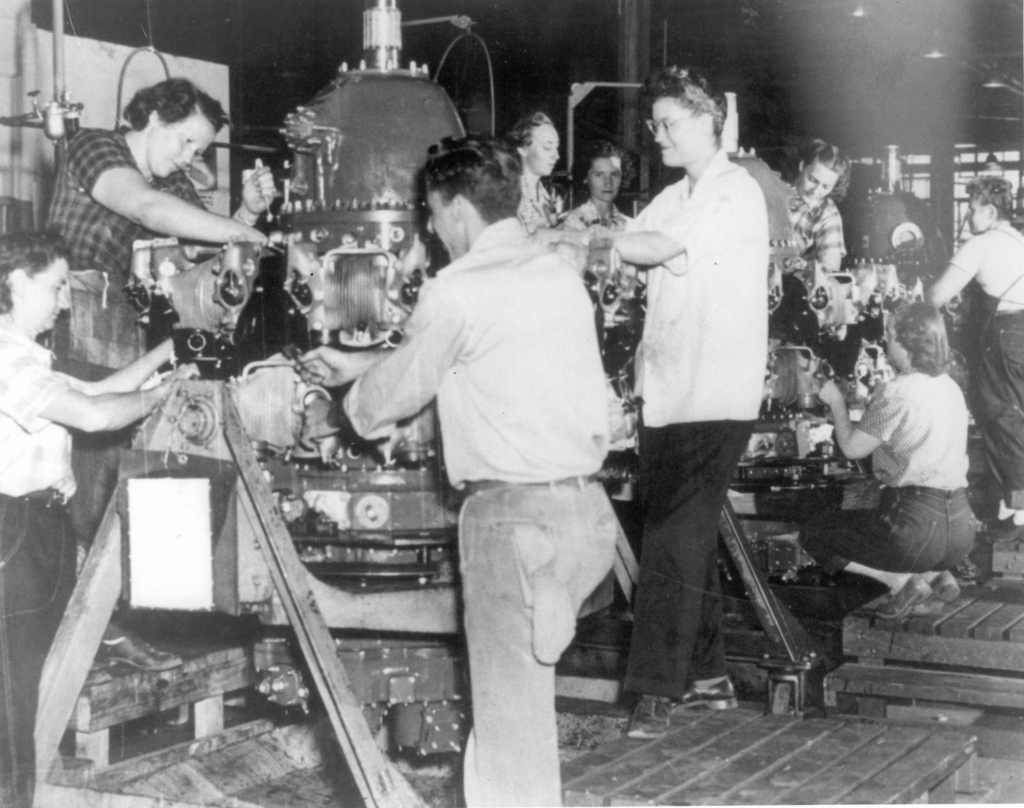
Focusing on individual women’s experiences, this lecture will highlight the variety of ways that women in Utah participated in World War II. By enlisting in military service, entering the workforce in unprecedented numbers, providing countless hours of volunteer work on the home front, and becoming advocates for peace and for Jewish and Japanese American communities, Utah women contributed in vital ways to the larger war effort.
About the speaker: Rebekah Clark is the Historical Director for Better Days, a nonprofit dedicated to expanding education about Utah women’s history. She co-authored the book Thinking Women: A Timeline of Suffrage in Utah and serves as a leader of the women’s history impact team for the Utah Women and Leadership Project’s Bolder Way Forward initiative. She teaches the American women’s history course at Utah Valley University.

Japanese American Experience in the West (Virtual) | RSVP
Wednesday, Oct. 22 at noon on Zoom
Explore the complexities of the Japanese American experience during World War II, marked uncertainty that included forced relocation, loyalty oaths, and military service. This lecture will examine the many different experiences that Japanese Americans had during WWII. Join us for a discussion with historians, writers, and descendants.
About the speaker: Hanako Wakatsuki-Chong is the executive director of the Japanese American Museum of Oregon in Portland, and is professionally trained as a public historian, political scientist, and museologist.

Utah’s WWII Narratives | RSVP
Tuesday, Oct. 28 at 7 p.m.
Weber State University Lindquist Hall, Room 101
How are historians helping to shape our understanding of Utah and WWII? Discover fresh insights into the historical context, research methodologies, and diverse interpretations of Utah’s vital role in the war from a panel of historians who specialize in WWII. The moderated panel will be followed by an open Q&A. Don’t miss this opportunity to hear from the leading voices shaping our understanding of this pivotal era in Utah’s history.
Panelists:
Lorrie Rands graduated from Weber State University in 2014 with a BA in History and a minor in Public History. In 2022 she received her masters in Professional Communications from Weber State. She has been working in Special Collections and University Archives at the Stewart Library as an oral historian and manuscript processor since 2014, and has worked on various oral history projects including All Out for Uncle Sam: World War II in Northern Utah. Her senior thesis, Food Comfort and a bit of Home: Maude Porter and the Ogden Canteen, 1942-1946, was published in the Utah Historical Quarterly, Winter 2016.
Branden Little is a professor of history at Weber State University where he researches the international history of the United States, humanitarian relief, and expeditionary warfare. He specializes in the era of the First and Second World Wars. He earned a Ph.D. in history from the University of California, Berkeley (2009), an M.A. in national security affairs from the U.S. Naval Postgraduate School (2002), and his B.A. in international relations and history from the University of California, Davis (1998). He received prizes for his doctoral dissertation and master’s thesis.
Allan Kent Powell retired in 2013 as managing editor of the Utah Historical Quarterly and as senior state historian at the Utah State Historical Society. He is the author of numerous articles and several books, including Utah Remembers World War II and Nels Anderson’s World War I Diary, which received the Army Historical Foundation’s Distinguished Writing Award for 2013.
From Desert to Defense: Utah’s Transformation in World War II | RSVP
Wednesday, Nov. 5 at 7 p.m.
Davis County Library Layton Branch
Discover how Utah became a cornerstone of America’s national defense during World War II. Due to its strategic inland location and vast, open spaces, the state transformed into a hub for providing essential supplies, aircraft, and military training. This lecture will dive into the creation of Hill Air Force Base and Wendover Airfield, exploring how these two sites left a lasting legacy that continues to shape our state today. Explore the fascinating history of how Utah’s landscape and ingenuity played a critical role in the war effort.
About the speakers:
Elisabeth Cropper is the Operations Manager for the Aerospace Heritage Foundation of Utah. She has over a decade of experience in public history, including working at Hill Aerospace Museum since March 2020. Elisabeth also served as the curator for the Hyrum City Museum for four years. She holds both a bachelor’s and a master’s degree in History from Utah State University.
Landon Wilkey is the museum curator for Historic Wendover Airfield, a position he has held since 2019. He also serves as an advisor to the Board of Directors. Landon holds both a bachelor’s and a master’s degree in History from Utah State University. His experience includes internships at the Brigham City Museum of Art & History and in the Merrill-Cazier Library’s Special Collections and Archives, as well as volunteer, intern, and staff positions at the Hill Aerospace Museum.

Utah Family and Material Culture of WWII | RSVP
Wednesday, November 12 at 7 p.m.
Logan Library, hosted in partnership with the Cache Valley Historical Society
How have everyday objects and cherished family memories become our most powerful link to Utah’s World War II experience? This interactive lecture, featuring object stories from the “Bringing War Home” project archive, goes beyond textbooks to show how personal artifacts can act as time capsules. We’ll explore how these tangible items, paired with the stories passed down through generations, shape our understanding of how ordinary Utahns faced extraordinary challenges. Join us to see how memory is preserved, not just in history books, but in the things we hold most dear.
About the speaker: Molly Cannon is an Assistant Professor in Anthropology and serves as Executive Director and Curator for the Museum of Anthropology. She shares her research through public programming and exhibits with USU and Cache Valley communities.