Published March 24, 2026
Visit the Museum of Utah, opening June 27 on the Utah Capitol Complex.
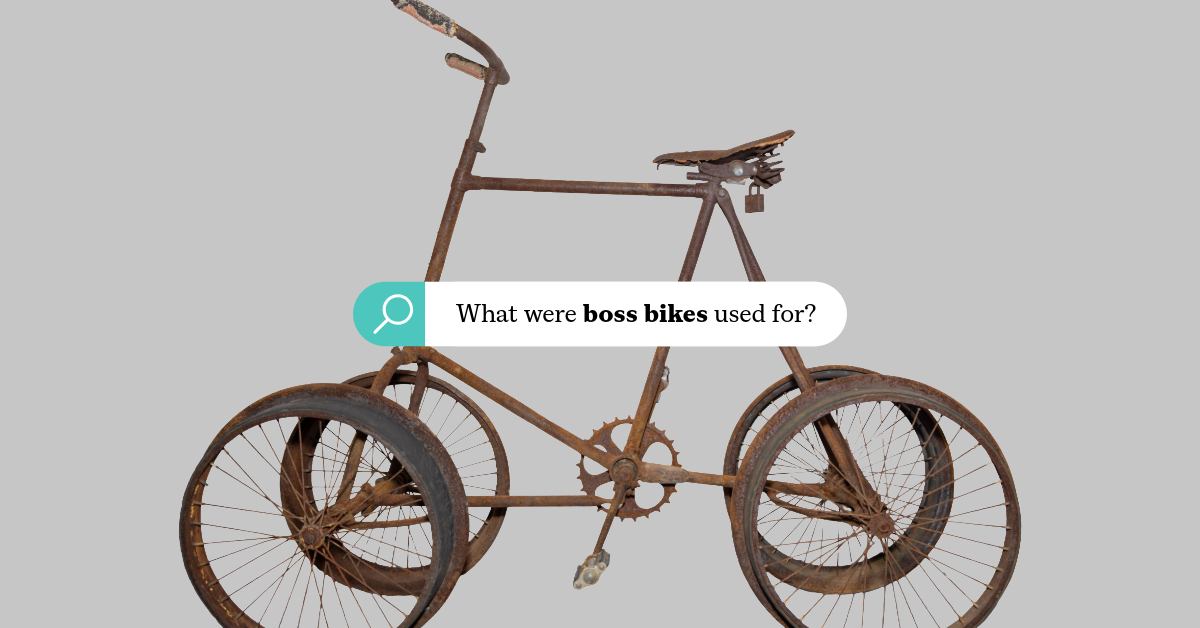
If you’re not sure, you’re not alone! In the late 19th and early 20th centuries, a boss bike (often called a rail or track bicycle) was a clever contraption custom-built for navigating the narrow-gauge railroad tracks deep inside underground mines.
Rather than rubber tires, these bikes were fitted with flanged metal wheels designed to grip the minecart rails. Shift managers used bikes like this for daily inspection of Utah’s mining tunnels.
As the name suggests, boss bikes were mainly used by shift bosses, foremen, and mine inspectors. The bikes allowed for a mine boss to pedal down tracks quickly and efficiently to cover massive distances underground. Did you know Utah has one of the most extensive mining histories in the American West? Park City alone has more than 1,200 miles of underground tunnels!
Utah’s unique geology and sprawling mining operations made it the perfect home for the boss bike. Because our rich deposits of silver, lead, copper, and coal often required incredibly long, horizontal tunnels for drainage and transportation, these bikes were a necessity.
The boss bike represents the incredible ingenuity and practical problem-solving that defined the industrial mining era. They were an essential tool of management, allowing them to oversee an invisible kingdom stretching deep beneath the Utah landscape.
Learn more about Utah’s mining history at the Museum of Utah – opening June 27.
This summer, as the nation reflects on 250 years of American history, Utahns are unwrapping a gift of their own. On Saturday, June 27, the Museum of Utah officially opens its doors. Join us on the Utah Capitol Complex from 9 a.m. to 8 p.m. for a full day of celebration, including live music, food trucks, activities, and more. Be among the first to explore our galleries and immerse yourself in the stories that shape our state. Learn more.